

- Production of gloss coated paper
- Manufacturing Improvements in Gloss Coated Paper
- Environmental Friendliness Compared to Uncoated Paper
- Environmental Impact of Disposal in Landfills
Gloss coated paper is a type of paper that has a high sheen or glossy finish on its surface. Here are some key characteristics:
- Surface Finish: It has a shiny, reflective surface which gives images and text a vibrant, high-contrast appearance. This finish makes colours appear more saturated and vivid.
- Ink Absorption: The glossy coating reduces ink absorption, which means that ink sits more on the surface rather than being absorbed into the paper. This results in sharper, more detailed print quality, especially for photographs and graphics.
- Durability: Gloss coated paper often has a protective layer that makes it more resistant to smudging, fingerprints, and water compared to uncoated papers. However, it can be more prone to scratches or scuffs due to its slick surface.
- Feel: It feels smooth and slick to the touch, which can be both a pro and a con depending on the intended use. While it’s great for visual appeal, it might not be as pleasant for writing or drawing due to its slippery nature.
- Common Uses:
- Magazines, flyers and brochures.
- Art prints and posters where colour vibrancy and detail are important.
- Product packaging to make items stand out on shelves.
- Marketing materials like flyers or postcards for visual impact.
- Reflections: One downside is that the glossy finish can be reflective, which might cause glare under certain lighting conditions, potentially making text harder to read or images less clear if not viewed directly.
- Environmental Considerations: Gloss coated papers often use more resources in production, including additional chemicals for the coating, which might make them less environmentally friendly compared to uncoated or recycled papers.
Gloss coated paper is chosen for applications where visual impact is paramount, often at the expense of some practicality in terms of readability or writing comfort. ^
Production of gloss coated paper
The production of gloss coated paper involves several steps, combining paper making with coating processes to achieve the desired finish. Here’s a detailed overview from start to finish:
1. Pulp Preparation
- Raw Material Acquisition: The process begins with sourcing raw materials, which are typically wood fibres from hardwood or softwood trees, although some papers might include recycled fibres or alternative plant fibres.
- Pulping: The raw materials are converted into pulp by mechanical (grinding wood into fibres) or chemical methods (using chemicals to break down lignin and separate fibres). Chemical pulping, like the Kraft process, produces stronger fibres suitable for coating.
- Cleaning and Refining: The pulp is cleaned to remove contaminants like bark, dirt, or wood chips. It’s then refined to break down fibre bundles, increase surface area, and improve bonding properties.
2. Papermaking
- Stock Preparation: The pulp is mixed with water to form a slurry, which might include additives like fillers (e.g., clay, calcium carbonate) to improve the paper’s printability and opacity, and dyes for Colour.
- Papermaking Process: This slurry is then fed onto a moving wire mesh where water drains, leaving a wet web of fibres. This web passes through press rollers to squeeze out more water, forming a wet sheet.
3. Drying
- Drying Section: The wet sheet moves through a series of heated cylinders or through an air dryer, where the remaining moisture is evaporated, turning the wet web into a dry paper sheet.
4. Calendaring
- Calendaring: The paper might go through a calendaring process where it’s passed between heavy rollers to smooth and compress it, giving it a specific finish, but gloss coating typically happens post-Calendaring.

5. Coating Application
- Preparation: The paper is ready for coating. The coating mix is typically made from pigments like clay or calcium carbonate, along with binders (e.g., starch, latex), and sometimes optical brighteners or other additives.
- Coating Methods:
- Blade Coating: A common method where excess coating is applied and then a blade scrapes off the surplus, leaving a uniform layer.
- Air Knife Coating: Coating is applied, and an air knife blows off excess, ensuring an even coat.
- Roll Coating: The coating is applied via rollers, which can be adjusted for thickness. ^
6. Drying the Coating
- Coating Dryers: The coated paper passes through another drying section, where heated air or infrared heaters might be used to dry the coating quickly without damaging the paper.
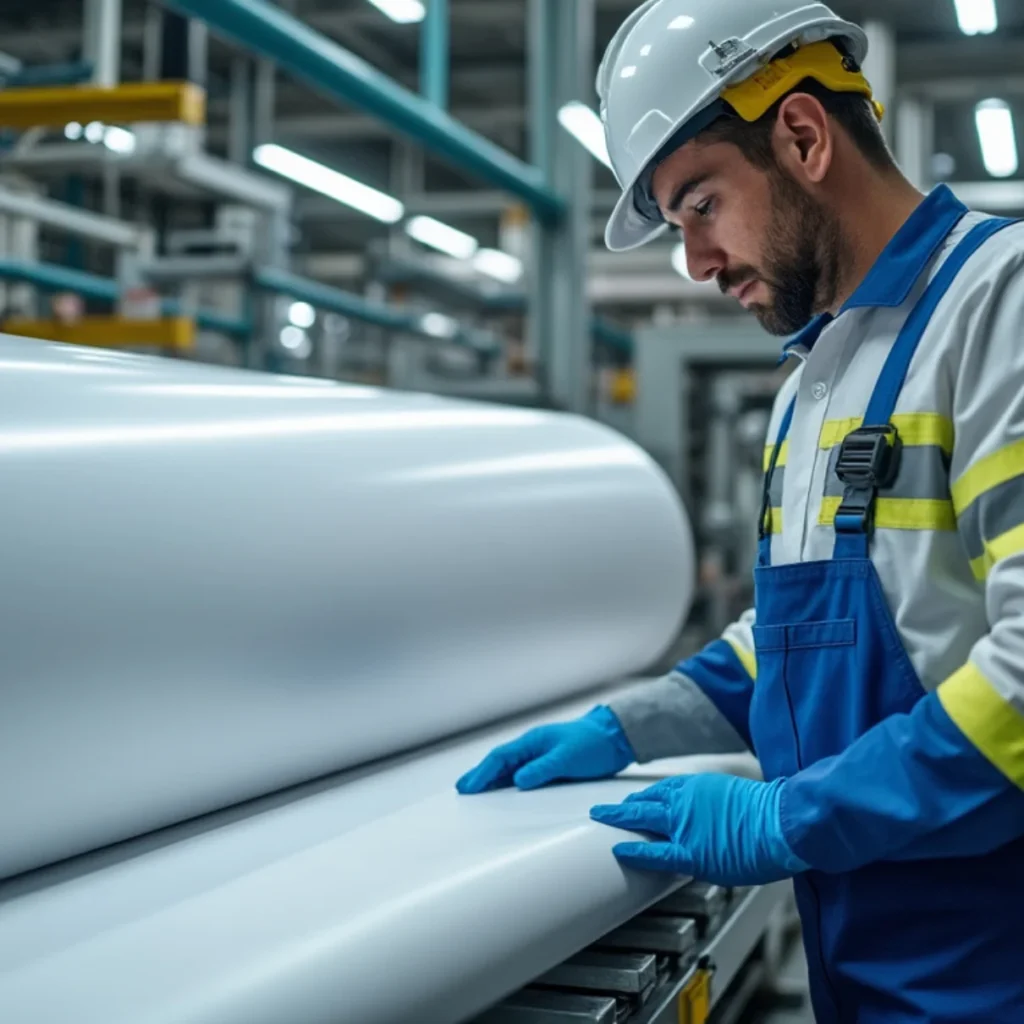
7. Smoothing and Polishing
- Super Calendaring: After coating, the paper might go through a super calender, which uses alternating metal and fibre rollers to give the paper a high gloss by compressing and polishing the surface.
8. Quality Control
- Inspection: The finished paper undergoes quality checks for gloss level, printability, colour, and defects.
9. Finishing
- Cutting and Rolling: The paper is cut to size or rolled onto large rolls for shipment or further processing.
10. Storage and Distribution
- Packaging: The finished gloss coated paper is then packaged to protect it from moisture and physical damage during transport.
11. Environmental Considerations
- Sustainability Practices: Modern mills often include recycling loops, energy recovery systems, and use of less harmful chemicals to minimize environmental impact.
Throughout this process, precision is key to achieving the consistency in gloss and quality that consumers expect from gloss coated paper. Each step is meticulously controlled to ensure the final product not only looks good but performs well in its intended application. ^
Manufacturing Improvements in Gloss Coated Paper:
Over the decades, the manufacturing process of gloss coated paper has seen several environmental improvements:
- Chemical Composition: Modern gloss coated papers often use more environmentally friendly pigments and binders. For instance, there’s a shift towards using ground calcium carbonate (GCC) instead of kaolin clay, which can reduce energy consumption in the coating process due to lower refining needs. Additionally, newer binders have been developed that are less harmful and more biodegradable compared to traditional latex binders.
- Water-Based Coatings: There’s been a move towards water-based coating formulations that reduce the reliance on solvents, thereby decreasing volatile organic compound (VOC) emissions, which are harmful to air quality.
- Energy Efficiency: Advances in machinery and processes have led to more energy-efficient production lines. This includes better heat recovery systems, more efficient drying processes, and the use of renewable energy sources in some mills, reducing the overall carbon footprint.
- Recycling Integration: Modern paper mills are increasingly designed to handle recycled fibres more efficiently, reducing the need for virgin pulp. This also applies to the production of gloss coated paper, where recycling coated papers back into the production cycle has become more feasible with technological advancements.
- Waste Management: Improved waste management practices within the manufacturing process have reduced the environmental impact. For instance, sludge from paper mills, once considered waste, is now often converted into bio fuels or used in land reclamation. ^
Environmental Friendliness Compared to Uncoated Paper:
- Resource Use: While coated papers typically require more processing steps, which might use more energy and water, the overall impact can be offset if the coating materials are eco-friendly and if the paper is recycled at higher rates due to its quality and value.
- Durability and Reusability: Gloss coated paper’s durability can lead to it being used longer or reused, potentially reducing the total paper consumption over time.
- Recyclability: Although coated papers can complicate recycling due to the coating materials, modern recycling facilities can handle coated papers more effectively. However, uncoated paper might still have an edge in recycling simplicity unless the coated paper’s recycling is optimized within the facility.
- Ink Absorption: Gloss coated paper’s lower ink absorption can result in less ink usage for the same print quality, potentially reducing environmental impact from ink production. ^
Environmental Impact of Disposal in Landfills:
- Decomposition: Gloss coated paper, due to its coating, decomposes more slowly than uncoated paper. This coating can resist microbial degradation, leading to longer persistence in landfills.
- Chemical Release: Over time, as the paper breaks down, there can be a release of chemicals from the coatings, although modern coatings aim to reduce this risk.
- Volume: Since coated papers are often thinner and more durable, they might take up less volume in landfills compared to bulkier uncoated papers, but they remain longer due to slower decomposition.
- Landfill Gas: While paper in general contributes to methane production in landfills, coated papers might alter microbial processes due to their chemical composition, potentially affecting gas composition but not necessarily reducing overall gas production.
- Recycling vs. Landfill: If not recycled, gloss coated paper’s environmental impact in landfills is generally higher due to the chemicals used in the coating, though this impact is mitigated if the paper is recycled or if landfill gas is captured for energy.
The trend in manufacturing gloss coated paper leans towards sustainability through better material choices, energy efficiency, and recycling integration, but its disposal still poses challenges compared to uncoated paper unless it’s recycled. ^